Imran Khan
Cricketer and politician · Cricketer · All-rounder · Former captain · Philanthropist · Politician · Former Prime Minister of Pakistan
b. 1952 · Born in Lahore, Punjab, Pakistan · 5 min read
- Last verified: 12 November 2026
- Sources: 11
- Reviewed by Muse — Phase D freshness re-verification (2026-11-12); Phase C second review (independent check)
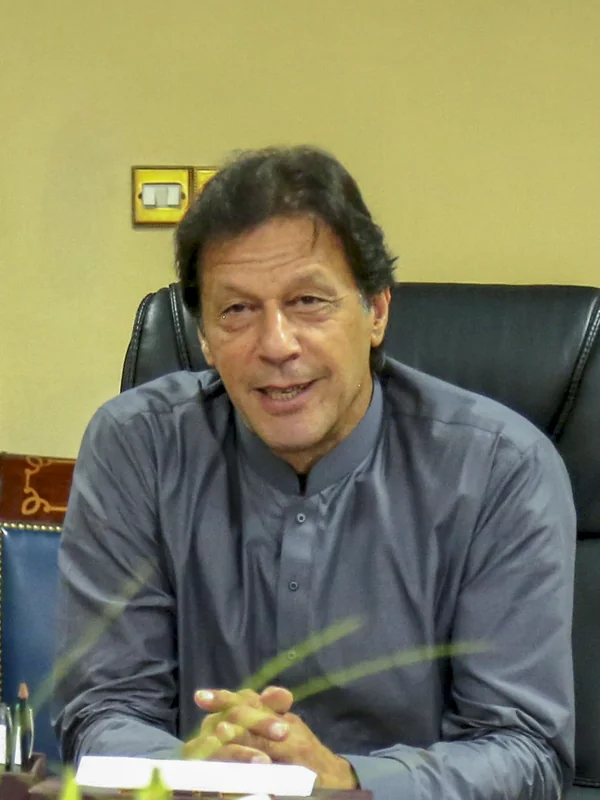
Pakistani cricketer and politician (born 1952) who captained Pakistan to the 1992 World Cup, built the Shaukat Khanum cancer hospital, founded the PTI and was Prime Minister from 2018 to 2022.
Early Life
Imran Ahmed Khan Niazi was born on 5 October 1952 in Lahore, Pakistan. He was the only son of Ikramullah Khan Niazi, a civil engineer, and Shaukat Khanum. He was educated at Aitchison College and the Cathedral School in Lahore, and in September 1971 moved to England to attend the Royal Grammar School in Worcester, where he played cricket. In 1972 he was admitted to Keble College, Oxford, where he studied philosophy, politics and economics and graduated in 1975, while also playing first-class cricket for the university and county cricket for Worcestershire.
Education
After Aitchison College in Lahore and the Royal Grammar School in Worcester, England, Khan studied philosophy, politics and economics (PPE) at Keble College, University of Oxford, graduating in 1975.
Career
Khan began his first-class career in Lahore in the 1969–70 season and made his Test debut for Pakistan against England on 3 June 1971. He studied at Keble College, Oxford, while playing county cricket for Worcestershire, and developed from a fast bowler into one of the world's leading all-rounders. He became Pakistan's captain in 1982 and led the side to its first Test series victories in India and England in 1987. He first retired in 1987, returned at the request of Pakistan's president, and in 1992 captained Pakistan to the World Cup, scoring 72 in the final against England at the Melbourne Cricket Ground on 25 March 1992 and taking the final wicket. He retired from cricket the same year. He then turned to philanthropy, raising the funds for the Shaukat Khanum Memorial Cancer Hospital, which opened in Lahore in 1994, named after his mother, who had died of cancer in 1985. On 25 April 1996 he founded the political party Pakistan Tehreek-e-Insaf (PTI). He was elected to the National Assembly in 2002, and after the PTI's breakthrough in the 2013 elections formed the government in Khyber Pakhtunkhwa. The PTI won the 2018 general election and Khan became Prime Minister on 18 August 2018. His government launched the Ehsaas welfare programme in 2019. On 10 April 2022 he was removed from office by a vote of no confidence in the National Assembly — the first Pakistani prime minister to be removed in that way — after losing the support of key allies. He was arrested on 5 August 2023 and has been imprisoned since, following convictions in a series of legal cases. In January 2025 an accountability court sentenced him to 14 years' imprisonment in the Al-Qadir Trust case, in which the prosecution alleged he accepted land as a bribe in exchange for official favours; he has denied the charges. On 20 December 2025 a special court sentenced him and his wife to 17 years' imprisonment each in the Toshakhana-II case, concerning allegations that they unlawfully retained a Bulgari jewellery set gifted by the Saudi crown prince; the sentence was ten years under Section 409 of the Pakistan Penal Code and seven years under the Prevention of Corruption Act, with a fine of PKR 16.4 million each. The Islamabad High Court heard the appeals against the Al-Qadir Trust convictions on 10 November 2026, ordered that he and Bushra Bibi be allowed meetings with their lawyers, and adjourned the hearing for ten days. Earlier convictions, including in cases concerning state gifts, state secrets and his marriage, were overturned or suspended. In July 2024 the United Nations Working Group on Arbitrary Detention published Opinion No. 22/2024 — adopted at its 99th session in March 2024 — finding his detention arbitrary and calling for his release; the Pakistani authorities have maintained that the cases against him are lawful. The legal position is contested and still developing, and the details in this profile are stated as of November 2026.
Achievements
Imran Khan's achievements span two careers. In cricket he was one of the great all-rounders of his era, taking 362 wickets at an average of 22.81 and scoring 3,807 runs in 88 Tests, and captaining Pakistan to its first World Cup title in 1992. He was inducted into the ICC Cricket Hall of Fame in 2009. After cricket he built the Shaukat Khanum Memorial Cancer Hospital and Research Centre in Lahore, which opened in 1994 as Pakistan's first cancer hospital and treats patients regardless of their ability to pay, and later helped establish Namal University in Mianwali. In politics he founded the Pakistan Tehreek-e-Insaf (PTI) in 1996 and led it to victory in the 2018 general election, serving as Prime Minister of Pakistan from 18 August 2018 to 10 April 2022.
Legacy
Imran Khan's legacy is that of two different public lives. As a cricketer he is remembered as Pakistan's World Cup-winning captain and one of the finest all-rounders the game has produced, and his hospital in Lahore is widely regarded as his most durable achievement outside sport. As a politician he built a party from nothing into government, became the first Pakistani prime minister removed by a vote of no confidence, and since 2023 has been at the centre of Pakistan's most contested political and legal dispute, with his supporters describing his imprisonment as politically motivated and his critics and the prosecuting authorities maintaining that he faces lawful corruption proceedings. Because the legal cases are contested and appeals are pending, his political legacy is still being written and cannot yet be finally assessed.
Major Achievements
- Captained Pakistan to its first Cricket World Cup title, beating England in the final in Melbourne on 25 March 1992
- One of cricket's great all-rounders: 88 Tests with 3,807 runs and 362 wickets, and 175 ODIs with 3,709 runs and 182 wickets
- Led Pakistan to its first Test series victories in India and England in 1987
- Inducted into the ICC Cricket Hall of Fame (2009)
- Founded the Shaukat Khanum Memorial Cancer Hospital and Research Centre in Lahore, Pakistan's first cancer hospital, opened in 1994
- Founded the political party Pakistan Tehreek-e-Insaf (PTI) in 1996
- Prime Minister of Pakistan from 18 August 2018 to 10 April 2022
- First Prime Minister of Pakistan to be removed from office through a parliamentary vote of no confidence
- Author of Pakistan: A Personal History (2011) and Warrior Race (1993)
Contributions
Khan's contribution to Pakistan cricket was to give the national team its first era of sustained success: as captain he built a side that won Test series in India and England and then the 1992 World Cup, and he mentored the generation of fast bowlers, including Wasim Akram and Waqar Younis, who defined Pakistan cricket for the next two decades. His contribution outside cricket is the Shaukat Khanum hospital network, which brought free cancer treatment to patients who could not pay. In politics his contribution is the creation of the PTI, which broke the two-party pattern of Pakistani politics and won government in 2018 on an anti-corruption platform, and the welfare programme Ehsaas. His removal in 2022 and imprisonment since 2023 have made him the central figure in an unresolved national dispute about the rule of law and the role of the military in Pakistani politics, on which reliable sources and public opinion remain sharply divided.
Notable Works
- Indus Journey: A Personal View of Pakistan (1980)
- Warrior Race: A Journey Through the Land of the Tribal Pathans (1993)
- Pakistan: A Personal History (2011)
Milestones
- 1952 — Born on 5 October in Lahore, Pakistan (some records give 25 November 1952) Source: Encyclopaedia Britannica; Wikipedia
- 1969 — Made his first-class debut for Lahore in the 1969–70 season Source: Wikipedia (cross-checked)
- 1971 — Made his Test debut for Pakistan against England at Edgbaston on 3 June 1971 Source: Wikipedia (cross-checked)
- 1975 — Graduated from Keble College, Oxford, with a degree in philosophy, politics and economics Source: Encyclopaedia Britannica; Wikipedia
- 1982 — Became captain of the Pakistan cricket team Source: Wikipedia (cross-checked)
- 1987 — Led Pakistan to its first Test series victories in India and England Source: Wikipedia (cross-checked)
- 1992 — Captained Pakistan to victory in the Cricket World Cup final against England at the Melbourne Cricket Ground on 25 March 1992 and retired from cricket Source: Encyclopaedia Britannica; Wikipedia
- 1994 — The Shaukat Khanum Memorial Cancer Hospital and Research Centre opened in Lahore on 29 December 1994 Source: Wikipedia (cross-checked)
- 1996 — Founded the political party Pakistan Tehreek-e-Insaf (PTI) on 25 April 1996 Source: Wikipedia (cross-checked)
- 2002 — Elected to the National Assembly from Mianwali Source: Wikipedia (cross-checked)
- 2018 — Became Prime Minister of Pakistan on 18 August 2018 after the PTI won the general election Source: Encyclopaedia Britannica; Wikipedia
- 2022 — Removed from office by a vote of no confidence on 10 April 2022, the first Pakistani prime minister removed in that way Source: Encyclopaedia Britannica; Wikipedia
- 2023 — Arrested on 5 August 2023 and imprisoned since Source: Al Jazeera
- 2024 — The UN Working Group on Arbitrary Detention published Opinion No. 22/2024 (adopted at its 99th session, 18-27 March 2024), finding his detention arbitrary and calling for his release Source: United Nations (A/HRC/WGAD/2024/22); Wikipedia
- 2025 — Sentenced to 14 years' imprisonment in the Al-Qadir Trust case on 17 January 2025; he denies the charges and has appealed Source: Al Jazeera
- 2025 — Sentenced with his wife to 17 years' imprisonment each in the Toshakhana-II case on 20 December 2025, over allegations concerning a Bulgari jewellery set gifted by the Saudi crown prince Source: The Express Tribune; Caliber.Az
- 2026 — The Islamabad High Court heard the appeals against the Al-Qadir Trust convictions on 10 November 2026, ordered that Khan and Bushra Bibi be allowed meetings with their lawyers, and adjourned the hearing for ten days Source: Dawn; The Nation
Timeline
- 5 October 1952
Born Imran Ahmed Khan Niazi in Lahore, Pakistan (some records, including his passport, give 25 November 1952)
Source: Encyclopaedia Britannica; Wikipedia - 1969
Made his first-class cricket debut for Lahore
Year only — exact date unknown Source: Wikipedia (cross-checked) - 3 June 1971
Made his Test debut for Pakistan against England at Edgbaston
Source: Wikipedia (cross-checked) - 1975
Graduated from Keble College, Oxford, with a degree in philosophy, politics and economics
Year only — exact date unknown Source: Encyclopaedia Britannica; Wikipedia - 1982
Became captain of the Pakistan cricket team
Year only — exact date unknown Source: Wikipedia (cross-checked) - 1987
Led Pakistan to its first Test series victories in India and England
Year only — exact date unknown Source: Wikipedia (cross-checked) - 25 March 1992
Captained Pakistan to victory in the Cricket World Cup final against England at the Melbourne Cricket Ground, scoring 72, and retired from cricket
Source: Encyclopaedia Britannica; Wikipedia - 29 December 1994
The Shaukat Khanum Memorial Cancer Hospital and Research Centre opened in Lahore
Source: Wikipedia (cross-checked) - 25 April 1996
Founded the political party Pakistan Tehreek-e-Insaf (PTI)
Source: Wikipedia (cross-checked) - 2002
Elected to the National Assembly from Mianwali
Year only — exact date unknown Source: Wikipedia (cross-checked) - 18 August 2018
Became Prime Minister of Pakistan after the PTI won the general election
Source: Encyclopaedia Britannica; Wikipedia - 10 April 2022
Removed from office by a vote of no confidence in the National Assembly, the first Pakistani prime minister removed in that way
Source: Encyclopaedia Britannica; Wikipedia - 5 August 2023
Arrested and imprisoned; he has remained in prison since
Source: Al Jazeera - 1 July 2024
The United Nations Working Group on Arbitrary Detention published Opinion No. 22/2024, adopted at its 99th session (18-27 March 2024), finding his detention arbitrary and calling for his release
Source: United Nations (A/HRC/WGAD/2024/22); Wikipedia - 17 January 2025
An accountability court sentenced him to 14 years' imprisonment in the Al-Qadir Trust case; he denies the charges and has appealed
Source: Al Jazeera - 20 December 2025
A special court sentenced him and his wife to 17 years' imprisonment each in the Toshakhana-II case, over allegations that they unlawfully retained a Bulgari jewellery set gifted by the Saudi crown prince
Source: The Express Tribune; Caliber.Az - 10 November 2026
The Islamabad High Court heard the appeals against the Al-Qadir Trust convictions, ordered that Khan and Bushra Bibi be allowed meetings with their lawyers, and adjourned the hearing for ten days
Source: Dawn; The Nation
Related Personalities
Frequently Asked Questions
Who is Imran Khan?
Imran Ahmed Khan Niazi (born 5 October 1952 in Lahore) is a Pakistani former cricketer and politician. As a cricketer he captained Pakistan to victory in the 1992 Cricket World Cup; as a politician he founded the Pakistan Tehreek-e-Insaf (PTI) and served as Prime Minister of Pakistan from August 2018 to April 2022.
Source: Encyclopaedia Britannica; WikipediaWhat did Imran Khan achieve in cricket?
He played 88 Tests for Pakistan between 1971 and 1992, scoring 3,807 runs and taking 362 wickets as an all-rounder, and played 175 One-Day Internationals. He became captain in 1982 and led Pakistan to its first Test series wins in India and England in 1987 and to the World Cup in 1992. He was inducted into the ICC Cricket Hall of Fame in 2009.
Source: Encyclopaedia Britannica; WikipediaWhen was Imran Khan Prime Minister of Pakistan?
He served as Prime Minister of Pakistan from 18 August 2018 to 10 April 2022, when he was removed by a vote of no confidence in the National Assembly — the first Pakistani prime minister to be removed in that way. He had founded the PTI in 1996 and led it to victory in the 2018 general election.
Source: Encyclopaedia Britannica; WikipediaWhat hospital did Imran Khan build?
He founded the Shaukat Khanum Memorial Cancer Hospital and Research Centre in Lahore, named after his mother, who died of cancer in 1985. The hospital opened in 1994 as Pakistan's first cancer hospital and provides treatment regardless of a patient's ability to pay; a second hospital later opened in Peshawar.
Source: Encyclopaedia Britannica; WikipediaWhy is Imran Khan in prison?
He was arrested on 5 August 2023 and has been imprisoned since. In January 2025 an accountability court sentenced him to 14 years' imprisonment in the Al-Qadir Trust case, in which the prosecution alleged he accepted land as a bribe; he denies the charges. On 20 December 2025 a special court sentenced him and his wife to 17 years' imprisonment each in the Toshakhana-II case, over allegations that they unlawfully retained a Bulgari jewellery set gifted by the Saudi crown prince. The Islamabad High Court heard the appeals against the Al-Qadir Trust convictions on 10 November 2026 and adjourned them for ten days. Earlier convictions were overturned or suspended, and in July 2024 the UN Working Group on Arbitrary Detention found his detention arbitrary and called for his release. The cases are contested and appeals are pending.
Source: Al Jazeera; The Express Tribune; Dawn; WikipediaSources & References
- Imran Khan — Encyclopaedia Britannica — Encyclopaedia Britannica (accessed 12 November 2026)
- Pakistan's ex-PM Imran Khan, wife sentenced to jail in corruption case — Al Jazeera — Al Jazeera (accessed 12 November 2026)
- Why jail access to Pakistan's Imran Khan has caused a political storm — Al Jazeera — Al Jazeera (accessed 12 November 2026)
- IHC fixes Imran and Bushra's appeals against sentences in £190m case for Nov 10 — The Express Tribune — The Express Tribune (accessed 12 November 2026)
- Imran Khan — Wikipedia — Wikipedia (accessed 12 November 2026)
- File:Imran Khan in Islamabad - 2018 (29559549217) (cropped).jpg — Wikimedia Commons (portrait file page) — Wikimedia Commons (accessed 12 November 2026)
- Opinion No. 22/2024 concerning Imran Ahmad Khan Niazi — UN Working Group on Arbitrary Detention (A/HRC/WGAD/2024/22) — United Nations (accessed 12 November 2026)
- Imran, Bushra’s appeals against conviction put off — Dawn — Dawn (accessed 12 November 2026)
- IHC orders lawyers meeting with jailed Imran, Bushra — The Nation (accessed 12 November 2026)
- Imran Khan undergoes eye treatment at PIMS, receives intravitreal injection — The Express Tribune (accessed 12 November 2026)
- Ex-Pakistan PM Imran Khan, wife sentenced to 17 years - In Toshakhana 2 case — Caliber.Az (accessed 12 November 2026)

Explore More
- More Athletes & Sports
- Personalities from Pakistan
- Personalities from United Kingdom
- More cricketer and politicians
- More cricketers
- More all-rounders
- More former captains
- More philanthropists
- More politicians
- More former prime minister of pakistans
- Famous people born in October
- Browse all personalities