Steve Jobs
Entrepreneur and inventor · Entrepreneur · Inventor · Industrial designer · Film studio executive
1955–2011 · Born in San Francisco, California, United States · 3 min read
- Last verified: 12 November 2026
- Sources: 5
- Reviewed by Muse — Phase C second review (independent check)
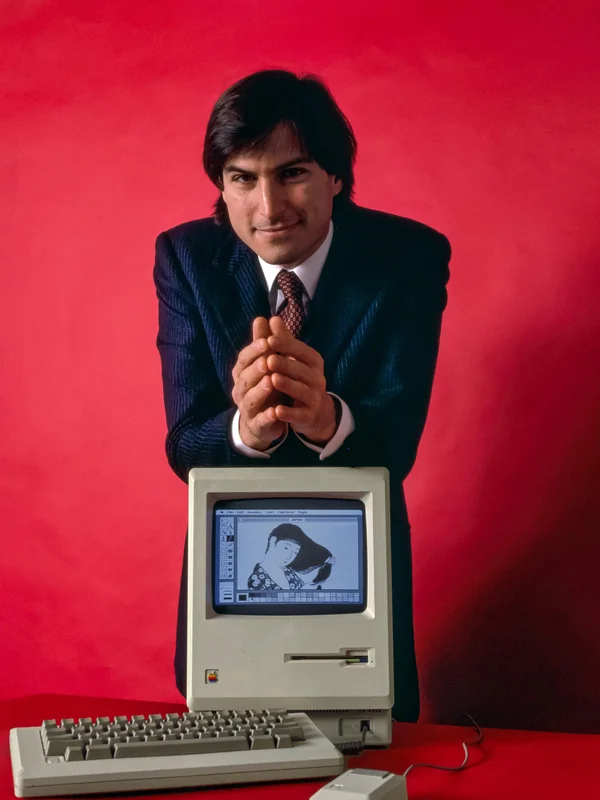
American entrepreneur who co-founded Apple in 1976, built Pixar, and returned to Apple to launch the iMac, iPod, iPhone and iPad, reshaping personal computing, music and mobile phones.
Early Life
Steven Paul Jobs was born on 24 February 1955 in San Francisco, California, and was adopted as an infant by Paul and Clara Jobs, who raised him in Mountain View and later Cupertino, California, in what became known as Silicon Valley. He grew up interested in electronics, and as a teenager he met Steve Wozniak, with whom he would later found Apple. He enrolled at Reed College in Portland, Oregon, in 1972 and dropped out after six months, though he stayed on campus for about another eighteen months, sitting in on classes that interested him, including calligraphy.
Education
Jobs attended Reed College in Portland, Oregon, from 1972, leaving after his first six months as a full-time student. He did not complete a degree. He later described the calligraphy classes he audited at Reed as an influence on the typography of the Macintosh, an account he gave in his 2005 commencement address at Stanford University.
Career
In 1976 Jobs and Steve Wozniak formed Apple Computer, building the Apple I in the Jobs family garage; Apple was incorporated in 1977 and the Apple II became an immediate success. Jobs led the Macintosh project and introduced the Mac in January 1984, but tensions with chief executive John Sculley led to his removal from the company in 1985. He founded NeXT Inc. the same year, designing powerful workstation computers, and in 1986 bought the computer graphics division of Lucasfilm, building it into Pixar Animation Studios. Pixar released Toy Story in 1995 and Jobs sold the studio to Disney in 2006. Apple bought NeXT in late 1996, bringing Jobs back; he became interim chief executive in September 1997 and permanent chief executive in 2000. Under him Apple launched the iMac (1998), the iPod (2001), the iTunes Music Store (2003), the iPhone (2007) and the iPad (2010). He resigned as chief executive on 24 August 2011, becoming chairman, and died on 5 October 2011.
Achievements
Jobs's central achievement was to make computing personal and then to make it beautiful. With Steve Wozniak he founded Apple in 1976 and turned the Apple II into the machine that defined the personal computer boom. He then pushed Apple toward the graphical interface he had seen at Xerox PARC, and introduced the Macintosh in January 1984. After being removed from Apple in 1985, he built two further companies: NeXT, whose software later became the foundation of Mac OS X, and Pixar, which released Toy Story in 1995, the first feature-length film made entirely by computer animation. Returning to Apple in 1997, he led the run of products that remade the company — the iMac in 1998, the iPod in 2001, the iPhone in 2007 and the iPad in 2010 — and changed how people listen to music, use phones and read. He was posthumously awarded the Presidential Medal of Freedom in 2022.
Legacy
Jobs is remembered as the co-founder who twice remade Apple: first as the pioneer of the personal computer with the Apple II and the Macintosh, and then as the chief executive who returned a failing company to health with the iMac, iPod, iPhone and iPad. His insistence that products should combine engineering with design set the standard for the consumer technology industry, and Pixar's success established computer animation as a mainstream art form. He died on 5 October 2011 in Palo Alto, California, aged 56, of complications from pancreatic cancer, and was posthumously awarded the Presidential Medal of Freedom in 2022.
Major Achievements
- Co-founded Apple Computer with Steve Wozniak and Ronald Wayne on 1 April 1976, building the Apple I in the Jobs family garage
- Led the development of the Macintosh, introduced on 24 January 1984 as one of the first mass-market personal computers with a graphical user interface and a mouse
- Founded NeXT Inc. in 1985 after leaving Apple, and bought the computer graphics division of Lucasfilm in 1986, building it into Pixar
- As Pixar's chairman, oversaw Toy Story (1995), the first feature-length film made entirely with computer animation
- Returned to Apple in 1997 and rebuilt it around a sequence of defining products: the iMac (1998), the iPod (2001), the iTunes Music Store (2003), the iPhone (2007) and the iPad (2010)
- Sold Pixar to Disney in 2006
- Delivered the 2005 Stanford University commencement address, whose closing words 'Stay hungry. Stay foolish.' became widely quoted
- Posthumously awarded the Presidential Medal of Freedom in 2022
Contributions
Jobs changed what a computer was for. At Apple he argued that a personal computer should be an object for ordinary people, not only for hobbyists and businesses, and he pushed the graphical interface and the mouse from the research lab into the mass market with the Macintosh. At Pixar he proved that a feature film could be made entirely by computer animation. In his second period at Apple he joined hardware, software and services into single products — the iPod with the iTunes Music Store, the iPhone with the App Store — a model the whole technology industry then followed.
Notable Works
- Apple I (1976)
- Apple II (1977)
- Macintosh (1984)
- Toy Story (1995)
- iMac (1998)
- iPod (2001)
- iPhone (2007)
- iPad (2010)
Milestones
- 1955 — Born on 24 February in San Francisco, California; adopted by Paul and Clara Jobs Source: Encyclopaedia Britannica; Wikipedia
- 1972 — Enrolled at Reed College, Portland, Oregon, and dropped out after six months Source: Encyclopaedia Britannica; Stanford University
- 1974 — Worked at Atari as a video game designer and travelled to India Source: Encyclopaedia Britannica
- 1976 — Co-founded Apple Computer with Steve Wozniak and Ronald Wayne on 1 April Source: Encyclopaedia Britannica; Wikipedia
- 1977 — Apple Computer incorporated; the Apple II completed and became an immediate success Source: Encyclopaedia Britannica
- 1984 — Introduced the Macintosh on 24 January Source: Encyclopaedia Britannica
- 1985 — Removed from Apple; founded NeXT Inc. Source: Encyclopaedia Britannica
- 1986 — Bought the Lucasfilm computer graphics division, which became Pixar Source: Encyclopaedia Britannica
- 1995 — Pixar released Toy Story, the first feature-length film made entirely by computer animation Source: Encyclopaedia Britannica
- 1997 — Returned to Apple when it bought NeXT; became interim chief executive in September Source: Encyclopaedia Britannica
- 1998 — Unveiled the iMac on 6 May Source: Encyclopaedia Britannica
- 2001 — Introduced the iPod on 23 October; the iTunes Music Store followed in 2003 Source: Encyclopaedia Britannica
- 2006 — Sold Pixar to Disney Source: Encyclopaedia Britannica
- 2007 — Announced the iPhone on 9 January Source: Encyclopaedia Britannica
- 2011 — Resigned as chief executive of Apple on 24 August; died on 5 October in Palo Alto, aged 56 Source: Encyclopaedia Britannica; Apple
- 2022 — Posthumously awarded the Presidential Medal of Freedom Source: Encyclopaedia Britannica
Timeline
- 24 February 1955
Born in San Francisco, California; adopted as an infant by Paul and Clara Jobs
Source: Encyclopaedia Britannica; Wikipedia - 1972
Enrolled at Reed College in Portland, Oregon; dropped out after six months
Year only — exact date unknown Source: Encyclopaedia Britannica; Stanford University - 1974
Worked as a video game designer at Atari; travelled to India
Year only — exact date unknown Source: Encyclopaedia Britannica - 1 April 1976
Co-founded Apple Computer with Steve Wozniak and Ronald Wayne
Source: Encyclopaedia Britannica; Wikipedia - 24 January 1984
Introduced the Macintosh
Source: Encyclopaedia Britannica - 1985
Removed from Apple; founded NeXT Inc.
Year only — exact date unknown Source: Encyclopaedia Britannica - 1986
Bought the Lucasfilm computer graphics division, which became Pixar
Year only — exact date unknown Source: Encyclopaedia Britannica - 1995
Pixar released Toy Story, the first feature-length film made entirely by computer animation
Year only — exact date unknown Source: Encyclopaedia Britannica - 16 September 1997
Became interim chief executive of Apple after Apple bought NeXT
Source: Encyclopaedia Britannica - 6 May 1998
Unveiled the iMac
Source: Encyclopaedia Britannica - 23 October 2001
Introduced the iPod
Source: Encyclopaedia Britannica - 9 January 2007
Announced the iPhone
Source: Encyclopaedia Britannica - 24 August 2011
Resigned as chief executive of Apple and became chairman
Source: Encyclopaedia Britannica; Wikipedia - 5 October 2011
Died in Palo Alto, California, aged 56, of complications from pancreatic cancer
Source: Encyclopaedia Britannica; Apple
In Their Words
“Stay hungry. Stay foolish.” Source: Stanford University Commencement Address, 12 June 2005 — Closing words of his commencement address at Stanford University, quoting the farewell message of the final issue of The Whole Earth Catalog.
Related Personalities
Frequently Asked Questions
Who was Steve Jobs?
Steve Jobs (1955–2011) was an American entrepreneur and inventor who co-founded Apple in 1976, built Pixar into a major animation studio, and returned to Apple in 1997 to lead the iMac, iPod, iPhone and iPad.
Source: Encyclopaedia Britannica; AppleWhen and how did Steve Jobs found Apple?
Jobs founded Apple with Steve Wozniak and Ronald Wayne on 1 April 1976. The Apple I was built in the Jobs family garage, and Apple Computer was incorporated in 1977, the same year the Apple II was completed.
Source: Encyclopaedia Britannica; WikipediaWhy did Steve Jobs leave Apple, and how did he return?
Jobs was removed from Apple in 1985 after tensions with chief executive John Sculley. He founded NeXT and bought the graphics division that became Pixar. Apple bought NeXT in late 1996, bringing him back, and he became interim chief executive in September 1997.
Source: Encyclopaedia BritannicaWhat products did Steve Jobs launch after returning to Apple?
In his second period as chief executive, Apple launched the iMac (1998), the iPod (2001), the iTunes Music Store (2003), the iPhone (2007) and the iPad (2010).
Source: Encyclopaedia BritannicaHow did Steve Jobs die?
Jobs was diagnosed with a rare form of pancreatic cancer in 2003. He resigned as Apple's chief executive on 24 August 2011 and died on 5 October 2011 in Palo Alto, California, aged 56, of complications from the disease.
Source: Encyclopaedia Britannica; AppleSources & References
- Steve Jobs — Encyclopaedia Britannica — Encyclopaedia Britannica (accessed 12 November 2026)
- Remembering Steve Jobs — Apple (official tribute) — Apple Inc. (accessed 12 November 2026)
- Steve Jobs — Wikipedia — Wikipedia (accessed 12 November 2026)
- Steve Jobs — Commencement Address at Stanford University, 12 June 2005 — Stanford University (transcript via American Rhetoric) (accessed 12 November 2026)
- File:Steve Jobs and Macintosh computer, January 1984, by Bernard Gotfryd - edited.jpg — Wikimedia Commons (portrait file page) — Wikimedia Commons (accessed 12 November 2026)
