Abdul Sattar Edhi
Humanitarian · Philanthropist · Social activist
1928–2016 · Born in Bantva, Gujarat, British India (now Gujarat, India) · 3 min read
- Last verified: 12 November 2026
- Sources: 4
- Reviewed by Muse — Phase D second review (independent check)
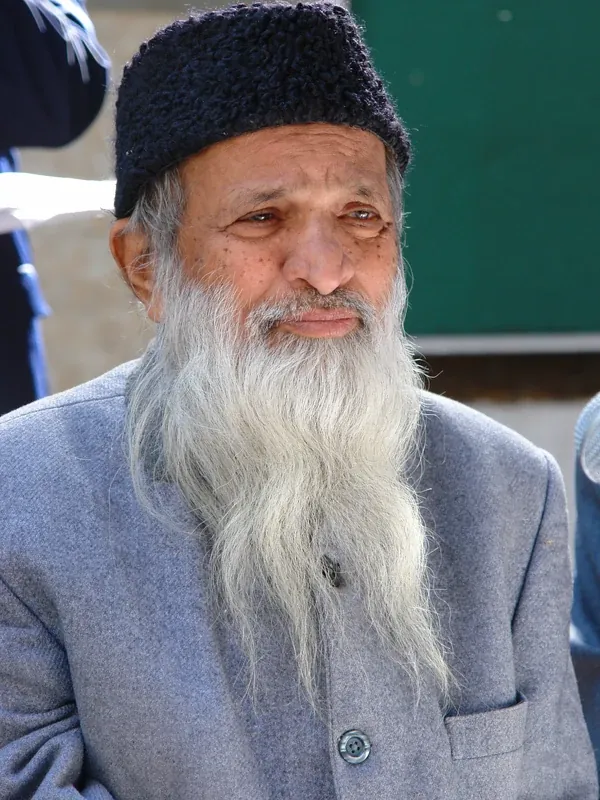
Pakistani humanitarian who built the Edhi Foundation from a single Karachi dispensary into the world's largest volunteer ambulance network and Pakistan's largest welfare organisation.
Early Life
Abdul Sattar Edhi was born in 1928 in Bantva, a town in Gujarat, British India, into a Memon Muslim family. He said in his autobiography that no record of his birth was kept and he did not know his exact date of birth; sources give 28 February 1928 or 1 January 1928. He received only a few years of formal schooling. Caring for his mother, who was paralysed and later died, shaped his commitment to serving the sick and the poor. After the Partition of India in 1947 his family migrated to Karachi, Pakistan.
Education
Edhi received only a few years of formal schooling in Bantva and was largely self-taught. He had no professional medical or academic training; his welfare work was built on practical experience.
Career
In 1951 Edhi used his savings to open a small free dispensary in a shop in the Mithadar quarter of Karachi, an eight-foot-square room where a doctor treated anyone who came. In 1957, after an Asian flu epidemic strained the city, he bought his first ambulance and often drove it himself, and the Edhi Trust was established. Over six decades the work grew into the Edhi Foundation, running the world's largest volunteer ambulance network alongside free hospitals and dispensaries, orphanages, shelters for the homeless, women's shelters, rehabilitation centres and morgues across Pakistan. He worked with his wife Bilquis, whom he married in 1966 and who ran the foundation's maternity and adoption work. He received the Ramon Magsaysay Award in 1986, the Lenin Peace Prize in 1988, Pakistan's highest civilian honour, the Nishan-e-Imtiaz, in 1989, and the Balzan Prize in 2000. Guinness World Records recorded the Edhi Foundation in 1997 as the largest volunteer ambulance organisation in the world. He suffered kidney failure from 2013 and died in Karachi on 8 July 2016, aged about 88, and was given a state funeral. His corneas were donated after his death, in line with his wishes.
Achievements
Edhi's achievement was to build Pakistan's largest welfare organisation from nothing, funded entirely by private donations, and to keep it running for six decades. The Edhi Foundation's ambulance network, recorded by Guinness World Records in 1997 as the largest volunteer ambulance organisation in the world, became the first responder for ordinary Pakistanis, and its orphanages, shelters and free hospitals served people of every religion without distinction. He was nominated several times for the Nobel Peace Prize. His awards include the Ramon Magsaysay Award for Public Service (1986), the Lenin Peace Prize (1988), the Nishan-e-Imtiaz (1989) and the Balzan Prize for humanity, peace and fraternity among peoples (2000).
Legacy
Edhi is Pakistan's most revered humanitarian, widely known as the country's 'Father Teresa'. He is remembered for a life of deliberate simplicity — he owned two sets of clothes and lived in a small room at the foundation's headquarters — and for serving people of all religions, including burying unclaimed bodies of every faith. His son Faisal Edhi leads the foundation, which continues to operate across Pakistan. His birth date remains uncertain because he himself did not know it, a fact the record states openly rather than choosing between the two dates in circulation.
Major Achievements
- Opened a free dispensary in Mithadar, Karachi, in 1951, the start of the Edhi Foundation
- Bought the foundation's first ambulance in 1957 and built the world's largest volunteer ambulance network
- Built Pakistan's largest welfare organisation: free hospitals, orphanages, homeless shelters, women's shelters and rehabilitation centres
- Received the Ramon Magsaysay Award for Public Service in 1986
- Received the Lenin Peace Prize in 1988
- Received the Nishan-e-Imtiaz, Pakistan's highest civilian honour, in 1989
- Received the Balzan Prize for humanity, peace and fraternity among peoples in 2000
- Guinness World Records recorded the Edhi Foundation in 1997 as the largest volunteer ambulance organisation in the world
- Nominated several times for the Nobel Peace Prize
- Given a state funeral on his death in 2016; his corneas were donated after his death
Contributions
Edhi's contribution was a model of welfare built on private giving and personal service rather than state funding. He showed that a single dispensary, staffed by volunteers and funded by small donations collected in the street, could grow into a national network that reached people the state did not. His insistence on serving people of every religion — and on burying the unclaimed dead of every faith — made the foundation a rare institution in Pakistan trusted across sectarian lines.
Notable Works
- Edhi Foundation (founded 1951)
- A Mirror to the Blind (autobiography, with Tehmina Durrani)
Milestones
- 1928 — Born in Bantva, Gujarat, British India (exact date not recorded) Source: Encyclopaedia Britannica; Wikipedia (cross-check)
- 1947 — Migrated with his family to Karachi, Pakistan, after Partition Source: Encyclopaedia Britannica
- 1951 — Opened a free dispensary in Mithadar, Karachi Source: Encyclopaedia Britannica
- 1957 — Bought the foundation's first ambulance after an Asian flu epidemic Source: Encyclopaedia Britannica
- 1966 — Married Bilquis Edhi, who led the foundation's maternity and adoption work Source: Wikipedia (Abdul Sattar Edhi, cross-check)
- 1986 — Received the Ramon Magsaysay Award for Public Service Source: Encyclopaedia Britannica
- 1988 — Received the Lenin Peace Prize Source: Encyclopaedia Britannica
- 1989 — Received the Nishan-e-Imtiaz, Pakistan's highest civilian honour Source: Encyclopaedia Britannica
- 1997 — Guinness World Records recorded the Edhi Foundation as the largest volunteer ambulance organisation in the world Source: Guinness World Records; Encyclopaedia Britannica
- 2000 — Received the Balzan Prize for humanity, peace and fraternity among peoples Source: Encyclopaedia Britannica
- 2013 — Suffered kidney failure and remained in ill health Source: Encyclopaedia Britannica
- 2016 — Died in Karachi on 8 July, aged about 88; given a state funeral Source: Encyclopaedia Britannica
Timeline
- 1928
Born in Bantva, Gujarat, British India; no birth record was kept
Year only — exact date unknown Source: Encyclopaedia Britannica; Wikipedia (cross-check) - 1947
Migrated with his family to Karachi, Pakistan
Year only — exact date unknown Source: Encyclopaedia Britannica - 1951
Opened a free dispensary in Mithadar, Karachi
Year only — exact date unknown Source: Encyclopaedia Britannica - 1957
Bought the foundation's first ambulance after an Asian flu epidemic
Year only — exact date unknown Source: Encyclopaedia Britannica - 1966
Married Bilquis Edhi
Year only — exact date unknown Source: Wikipedia (Abdul Sattar Edhi, cross-check) - 1986
Received the Ramon Magsaysay Award for Public Service
Year only — exact date unknown Source: Encyclopaedia Britannica - 1988
Received the Lenin Peace Prize
Year only — exact date unknown Source: Encyclopaedia Britannica - 1989
Received the Nishan-e-Imtiaz, Pakistan's highest civilian honour
Year only — exact date unknown Source: Encyclopaedia Britannica - 1997
Guinness World Records recorded the Edhi Foundation as the largest volunteer ambulance organisation in the world
Year only — exact date unknown Source: Guinness World Records - 2000
Received the Balzan Prize for humanity, peace and fraternity among peoples
Year only — exact date unknown Source: Encyclopaedia Britannica - 2013
Suffered kidney failure and remained in ill health
Year only — exact date unknown Source: Encyclopaedia Britannica - 8 July 2016
Died in Karachi of kidney failure, aged about 88; given a state funeral
Source: Encyclopaedia Britannica
In Their Words
“No religion is higher than humanity.” Source: Abdul Sattar Edhi, interview, as reported by Daily News Egypt (2012); also cited by The Nation (2016) — Edhi's best-known statement of his humanitarian philosophy, reported from an interview.
Related Personalities
Frequently Asked Questions
Who was Abdul Sattar Edhi?
Abdul Sattar Edhi (1928-2016) was a Pakistani humanitarian who founded the Edhi Foundation, Pakistan's largest welfare organisation, which runs the world's largest volunteer ambulance network along with free hospitals, orphanages, homeless shelters and women's shelters across Pakistan.
Source: Encyclopaedia BritannicaWhat is the Edhi Foundation?
The Edhi Foundation is the welfare organisation Edhi founded in Karachi, beginning with a free dispensary in 1951. It runs the world's largest volunteer ambulance network — recorded by Guinness World Records in 1997 — plus free hospitals and dispensaries, orphanages, shelters for the homeless, women's shelters, rehabilitation centres and morgues, funded entirely by private donations.
Source: Encyclopaedia Britannica; Guinness World RecordsWhat awards did Edhi receive?
Edhi received the Ramon Magsaysay Award for Public Service in 1986, the Lenin Peace Prize in 1988, the Nishan-e-Imtiaz, Pakistan's highest civilian honour, in 1989, and the Balzan Prize for humanity, peace and fraternity among peoples in 2000. He was also nominated several times for the Nobel Peace Prize.
Source: Encyclopaedia BritannicaWhy is Edhi called Pakistan's most revered humanitarian?
Edhi built the country's largest welfare network from a single dispensary, served people of every religion without distinction, lived in deliberate simplicity, and worked for six decades without seeking wealth or office. On his death in 2016 he was given a state funeral, and his corneas were donated in line with his wishes.
Source: Encyclopaedia BritannicaWhen was Edhi born?
Edhi's exact birth date is not known. He said in his autobiography that no record of his birth was kept and he did not know the date. Sources give 28 February 1928 or 1 January 1928; this profile therefore records only the year, 1928, rather than choosing between the two dates.
Source: Encyclopaedia Britannica; Wikipedia (Abdul Sattar Edhi, cross-check)Sources & References
- Abdul Sattar Edhi Legacy — Confinity — Confinity (accessed 12 November 2026)
- Abdul Sattar Edhi — Wikipedia (cross-check) — Wikipedia (accessed 12 November 2026)
- Sir Abdul Sattar Edhi — Angel of Mercy — The Nation — The Nation (accessed 12 November 2026)
- File:Abdul Sattar Edhi.jpg — Wikimedia Commons (portrait file page) — Wikimedia Commons (accessed 12 November 2026)
