Charles Darwin
Naturalist · Geologist · Biologist
1809–1882 · Born in Shrewsbury, Shropshire, England · 4 min read
- Last verified: 12 November 2026
- Sources: 4
- Independently reviewed before publication
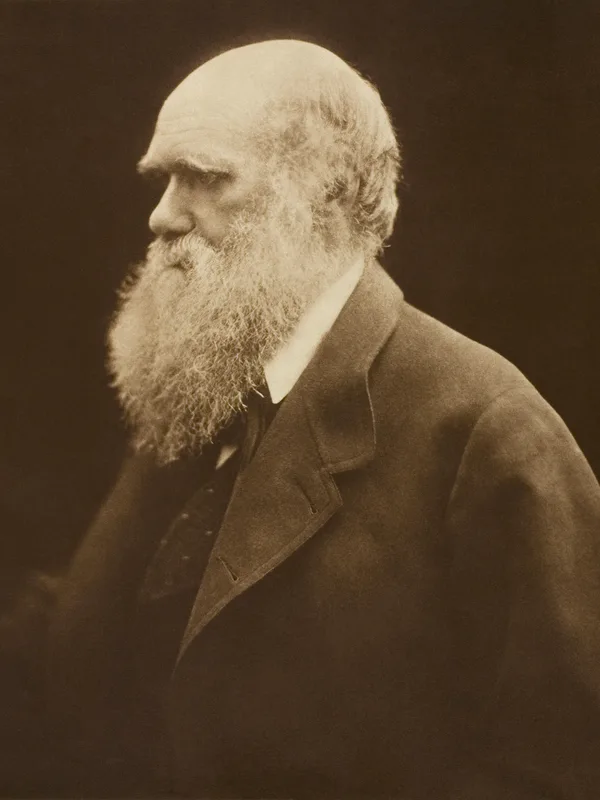
English naturalist whose theory of evolution by natural selection, published in On the Origin of Species (1859), became the foundation of modern evolutionary biology.
Early Life
Charles Robert Darwin was born on 12 February 1809 in Shrewsbury, Shropshire, England, the second son of the physician Robert Waring Darwin and Susannah Wedgwood, daughter of the pottery industrialist Josiah Wedgwood. He was educated at Shrewsbury School, then sent to the University of Edinburgh in 1825 to study medicine; he disliked surgery and left without a degree. In 1828 he entered Christ's College, Cambridge, to train for the Church of England clergy, but spent his time on natural history, collecting beetles and attending the lectures of the botany professor John Stevens Henslow. Henslow recommended him for the Beagle voyage, and his father agreed to fund the trip after his uncle Josiah Wedgwood II argued the case.
Education
Darwin studied medicine at the University of Edinburgh from 1825 to 1827, leaving without a degree. He then studied at Christ's College, Cambridge, from 1828, graduating with a Bachelor of Arts degree in 1831. At Cambridge he attended John Stevens Henslow's botany lectures and studied geology with Adam Sedgwick, whose field trip to North Wales in August 1831 immediately preceded the Beagle voyage.
Career
On 27 December 1831 Darwin sailed from England as the self-financed gentleman companion to Captain Robert FitzRoy on HMS Beagle, a surveying voyage around the world that lasted almost five years, returning on 2 October 1836. He collected fossils, birds, plants and geological observations in South America, the Galapagos Islands, Tahiti, New Zealand, Australia and Africa. Back in England he worked out the theory of natural selection in private notebooks in 1837-1839, and published his Journal of Researches (the Voyage of the Beagle) in 1839. In 1858 Alfred Russel Wallace sent him a paper describing the same idea; their work was presented jointly to the Linnean Society on 1 July 1858, and Darwin rushed his longer account into print as On the Origin of Species on 24 November 1859. He spent the rest of his life at Down House in Kent, publishing further books and exchanging some 15,000 letters with correspondents worldwide, now catalogued by the Darwin Correspondence Project.
Achievements
Darwin's central achievement was the theory of evolution by natural selection, set out in On the Origin of Species (1859). He argued that individuals vary, that some variations help their bearers survive and reproduce, and that over many generations those traits become common, so species change and new species arise. The book drew on twenty years of evidence: the fossils and living animals he collected on the Beagle voyage, his breeding experiments, and his correspondence with naturalists and farmers around the world. He was elected a Fellow of the Royal Society in 1839 and received its Copley Medal in 1864. His later books extended the theory to human descent, sexual selection and the expression of emotions, and his final book, on earthworms (1881), showed the same patient experimental method applied to a humble subject.
Legacy
Darwin's theory of evolution by natural selection became the foundation of modern evolutionary studies and reshaped biology, geology, anthropology and public debate about humanity's place in nature. He died at Down House on 19 April 1882 and, after petitions from scientists and members of Parliament, was buried in Westminster Abbey on 26 April 1882, close to Isaac Newton. His notebooks, manuscripts and some 15,000 letters are preserved and published by the Darwin Correspondence Project and Darwin Online, making his working methods unusually well documented. The Galapagos finches and the voyage of the Beagle remain standard teaching examples of how evidence, rather than a single moment of insight, builds a scientific theory.
Major Achievements
- Formulated the theory of evolution by natural selection, the foundation of modern evolutionary biology
- Published On the Origin of Species on 24 November 1859; the first edition of 1,250 copies sold out on the day of issue
- Elected a Fellow of the Royal Society in 1839 and awarded its Copley Medal in 1864
- Collected the specimens and observations on the five-year HMS Beagle voyage (1831-1836) that underpinned the theory
- Published The Descent of Man (1871), applying evolutionary theory to human origins
- Built a body of work of more than a dozen books, including studies of orchids, insect-eating plants, earthworms and the expression of emotions
Contributions
Darwin joined field observation with experiment and correspondence on a global scale. The Beagle voyage supplied fossils of extinct giant mammals, mockingbirds and finches that differed between islands, and geological evidence of slow change. His breeding experiments and letters from pigeon fanciers and farmers supplied the analogy of artificial selection. From these he built natural selection: variation, inheritance, the struggle for existence, and the preservation of favourable variations. The theory explained both the unity of life (common descent) and its diversity (divergence), and it gave biology a testable mechanism that later work in genetics and palaeontology confirmed and extended.
Notable Works
- Journal of Researches into the Natural History and Geology of the Countries Visited During the Voyage of H.M.S. Beagle (1839)
- On the Origin of Species by Means of Natural Selection (1859)
- The Variation of Animals and Plants under Domestication (1868)
- The Descent of Man, and Selection in Relation to Sex (1871)
- The Expression of the Emotions in Man and Animals (1872)
- The Formation of Vegetable Mould, through the Action of Worms (1881)
Milestones
- 1809 — Born on 12 February in Shrewsbury, Shropshire, England Source: Encyclopaedia Britannica
- 1831 — Sailed aboard HMS Beagle on a five-year surveying voyage around the world Source: Encyclopaedia Britannica; Darwin Correspondence Project
- 1835 — Visited the Galapagos Islands and collected the finches and mockingbirds later central to his theory Source: Encyclopaedia Britannica
- 1836 — Returned to England; first sketched the theory of natural selection in private notebooks Source: Encyclopaedia Britannica
- 1839 — Elected a Fellow of the Royal Society; married Emma Wedgwood Source: Darwin Correspondence Project
- 1842 — Moved to Down House in Kent, his home and workplace for the rest of his life Source: Darwin Correspondence Project
- 1858 — Joint presentation of natural selection with Alfred Russel Wallace at the Linnean Society Source: Encyclopaedia Britannica
- 1859 — Published On the Origin of Species on 24 November 1859 Source: Encyclopaedia Britannica; Darwin Correspondence Project
- 1864 — Awarded the Royal Society's Copley Medal Source: Encyclopaedia Britannica
- 1871 — Published The Descent of Man Source: Encyclopaedia Britannica
- 1882 — Died at Down House and was buried in Westminster Abbey Source: Encyclopaedia Britannica; Darwin Correspondence Project
Timeline
- 12 February 1809
Born in Shrewsbury, Shropshire, England, second son of Dr Robert Waring Darwin and Susannah Wedgwood
Source: Encyclopaedia Britannica - 1825
Began studying medicine at the University of Edinburgh; left without a degree
Year only — exact date unknown Source: Encyclopaedia Britannica; Darwin Correspondence Project - 1828
Entered Christ's College, Cambridge, to train for the clergy; studied botany under John Stevens Henslow
Year only — exact date unknown Source: Encyclopaedia Britannica - 27 December 1831
Sailed from England aboard HMS Beagle as gentleman companion to Captain Robert FitzRoy
Source: Encyclopaedia Britannica; Darwin Correspondence Project - 15 September 1835
Reached the Galapagos Islands aboard HMS Beagle, staying about five weeks
Source: Encyclopaedia Britannica - 2 October 1836
Returned to England after the Beagle's circumnavigation of the globe
Source: Encyclopaedia Britannica; Darwin Correspondence Project - 24 January 1839
Elected a Fellow of the Royal Society
Source: Darwin Correspondence Project - 29 January 1839
Married his cousin Emma Wedgwood; the couple had ten children, seven of whom lived to adulthood
Source: Darwin Correspondence Project - 1842
Moved with his family to Down House in Kent, where he lived and worked for the rest of his life
Year only — exact date unknown Source: Darwin Correspondence Project - 1 July 1858
Darwin's and Alfred Russel Wallace's papers on natural selection were presented jointly to the Linnean Society
Source: Encyclopaedia Britannica - 24 November 1859
On the Origin of Species published in London by John Murray; the first edition sold out on the day of issue
Source: Encyclopaedia Britannica; Darwin Correspondence Project - 1864
Awarded the Copley Medal of the Royal Society
Year only — exact date unknown Source: Encyclopaedia Britannica - 1871
Published The Descent of Man, applying evolutionary theory to human origins
Year only — exact date unknown Source: Encyclopaedia Britannica - 19 April 1882
Died at Down House, aged 73
Source: Encyclopaedia Britannica; Darwin Correspondence Project - 26 April 1882
Buried in Westminster Abbey, London, near Isaac Newton
Source: Darwin Correspondence Project; Westminster Abbey
In Their Words
“There is grandeur in this view of life, with its several powers, having been originally breathed into a few forms or into one.” Source: Charles Darwin, On the Origin of Species (John Murray, 1859) — Closing passage of On the Origin of Species (1859)
Related Personalities
Frequently Asked Questions
Who was Charles Darwin?
Charles Darwin (1809-1882) was an English naturalist whose theory of evolution by natural selection, published in On the Origin of Species (1859), became the foundation of modern evolutionary biology.
Source: Encyclopaedia BritannicaWhat is the theory of evolution by natural selection?
The theory says that individuals in a population vary, that some variations help their bearers survive and reproduce, and that over many generations those traits become common, so species gradually change and new species arise.
Source: Encyclopaedia BritannicaWhat was the voyage of HMS Beagle?
Darwin sailed on HMS Beagle from 27 December 1831 to 2 October 1836, a surveying voyage around the world. He collected fossils, birds and plants in South America, the Galapagos Islands, Tahiti, New Zealand, Australia and Africa, and the voyage supplied much of the evidence for his theory.
Source: Encyclopaedia Britannica; Darwin Correspondence ProjectWhen did Darwin publish On the Origin of Species?
On the Origin of Species was published on 24 November 1859, more than twenty years after Darwin first sketched the theory in private in 1837-1839. He published it after Alfred Russel Wallace sent him a paper describing the same idea in 1858.
Source: Encyclopaedia Britannica; Darwin Correspondence ProjectWhere is Charles Darwin buried?
Darwin died at Down House on 19 April 1882 and was buried in Westminster Abbey on 26 April 1882, near Isaac Newton, after scientists and members of Parliament petitioned for the national honour.
Source: Darwin Correspondence Project; Westminster AbbeySources & References
- Charles Darwin — Encyclopaedia Britannica — Encyclopaedia Britannica (accessed 12 November 2026)
- Darwin timeline — Darwin Correspondence Project — Darwin Correspondence Project, University of Cambridge (accessed 12 November 2026)
- Darwin, Charles Robert — Encyclopaedia Britannica 11th ed. (1910), via Darwin Online — Darwin Online (accessed 12 November 2026)
- File:Charles Darwin by Julia Margaret Cameron, c. 1868.jpg — Wikimedia Commons (portrait file page) — Wikimedia Commons (accessed 12 November 2026)
