Wasim Akram
Cricketer · Fast bowler · Cricket commentator · Bowling coach
b. 1966 · Born in Lahore, Pakistan · 3 min read
- Last verified: 12 November 2026
- Sources: 4
- Reviewed by Muse — Phase D second review (independent check)
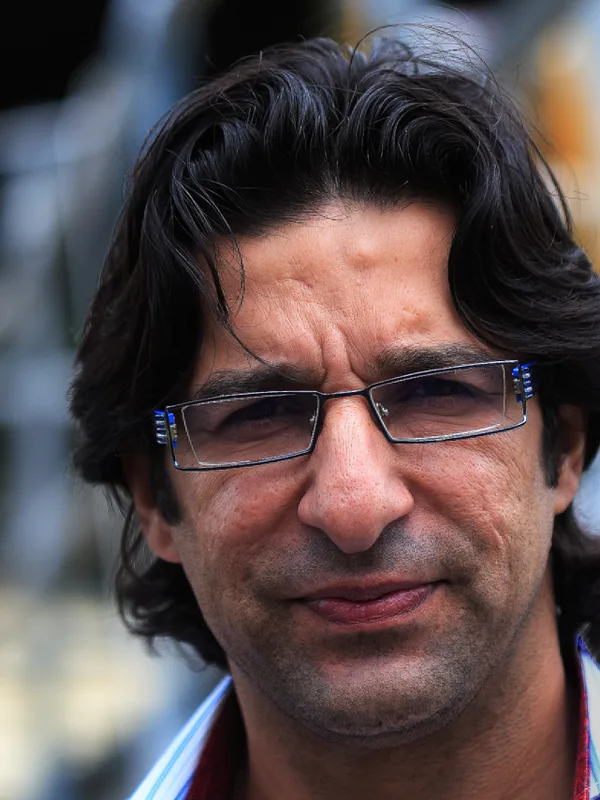
Pakistani left-arm fast bowler, the 'Sultan of Swing', who took 414 Test and 502 ODI wickets and starred in Pakistan's 1992 World Cup win.
Early Life
Wasim Akram was born on 3 June 1966 in Lahore, Pakistan, and played club cricket in the city as a teenager. He came to the attention of the national selectors while still a schoolboy cricketer and was fast-tracked into the Pakistan side in 1984 at the age of 18, an unusually rapid rise for a bowler who had not yet played first-class cricket. He learned his craft in domestic cricket with Lahore and later with Pakistan International Airlines, and in English county cricket with Lancashire, whom he represented for a decade.
Career
Akram was picked for Pakistan in 1984 at the age of 18, before he had played a first-class match. He made his One-Day International debut against New Zealand at Faisalabad on 23 November 1984 and his Test debut against the same opponents at Auckland on 25 January 1985. A left-arm fast bowler who swung the new ball both ways and mastered reverse swing with the old ball, he became the spearhead of Pakistan's attack for almost two decades. He was a central figure in Pakistan's first World Cup triumph in Australia in 1992, and as captain he led the side to the final of the 1999 World Cup in England, where Pakistan lost to Australia. He played his last One-Day International against Zimbabwe at Bulawayo on 4 March 2003, during the 2003 World Cup, and retired from international cricket that year with 916 international wickets. After retirement he worked as a television commentator and as a bowling coach, including with the Kolkata Knight Riders in the Indian Premier League.
Achievements
Akram's records mark him as one of the greatest fast bowlers in cricket history. In Tests he took 414 wickets in 104 matches, the most by any Pakistan bowler, at an average of 23.62; in One-Day Internationals he took 502 wickets in 356 matches, the first bowler to reach 500 ODI wickets, and he remains the leading ODI wicket-taker among fast bowlers. His defining performance came in the 1992 World Cup final at Melbourne, where his quick 33 off 19 balls lifted Pakistan to 249, and his two unplayable deliveries to Allan Lamb and Chris Lewis turned the match; he was named Man of the Match. With the bat he scored 257 not out against Zimbabwe in 1996, still the highest Test innings by a number-eight batsman, with 12 sixes in a Test innings — a record at the time, equalled by Yashasvi Jaiswal in 2024. He was named Wisden Cricketer of the Year in 1993, was the only Pakistani named in Wisden's all-time Test World XI in 2013, was inducted into the ICC Cricket Hall of Fame in 2009, and received Pakistan's Hilal-e-Imtiaz in 2019.
Legacy
Akram is widely regarded as one of the finest fast bowlers ever to play the game and as the greatest left-arm fast bowler in history. He is credited, with his great rival and team-mate Waqar Younis, as a pioneer and the finest exponent of reverse swing bowling, a skill that changed how the old ball is used in all formats. The nickname 'Sultan of Swing' is used across the cricket world for his ability to move the ball late in both directions at pace. His 502 ODI wickets remain a benchmark for fast bowlers, and his 1992 World Cup final spell is replayed as one of the great individual performances in a final.
Major Achievements
- Took 414 wickets in 104 Test matches, the most by any Pakistan bowler
- Took 502 wickets in 356 One-Day Internationals, the first bowler to reach 500 ODI wickets
- Starred in Pakistan's 1992 World Cup final win over England, scoring 33 off 19 balls and taking 3 wickets, and was named Man of the Match
- Captained Pakistan to the final of the 1999 Cricket World Cup
- Scored 257 not out against Zimbabwe at Sheikhupura in October 1996, the highest Test innings by a number-eight batsman, including 12 sixes in a Test innings — a record at the time, equalled by Yashasvi Jaiswal in 2024
- Named Wisden Cricketer of the Year in 1993 and inducted into the ICC Cricket Hall of Fame in 2009
- Awarded the Hilal-e-Imtiaz by the Government of Pakistan in 2019 for lifetime achievements in cricket
Contributions
Akram changed what a left-arm fast bowler could do. Before him, left-arm pace was a supporting role in most attacks; he made it the cutting edge, combining conventional swing with the new ball and reverse swing with the old, plus a sharp bouncer and a yorker, all delivered with a smooth, repeatable action. His success with reverse swing forced batsmen and coaches worldwide to study the skill and changed one-day tactics, since a bowler could now be lethal in the final overs rather than merely containing. As a lower-order batsman he also showed that a number eight could win matches, most famously with 257 not out against Zimbabwe in 1996.
Notable Works
- Pakistan national cricket team (1984-2003)
- 1992 Cricket World Cup winner, Man of the Match in the final
- Lancashire County Cricket Club (1988-1998)
- Kolkata Knight Riders bowling coach (Indian Premier League)
Milestones
- 1966 — Born on 3 June in Lahore, Pakistan Source: Encyclopaedia Britannica; ICC
- 1984 — Made his ODI debut against New Zealand at 18, before playing first-class cricket Source: ESPNcricinfo
- 1985 — Made his Test debut against New Zealand at Auckland Source: ESPNcricinfo
- 1992 — Starred in Pakistan's World Cup final win over England and was named Man of the Match Source: ICC; ESPNcricinfo
- 1993 — Named Wisden Cricketer of the Year Source: Wisden
- 1996 — Scored 257 not out against Zimbabwe, the highest Test innings by a number-eight batsman Source: ESPNcricinfo; ICC
- 1999 — Captained Pakistan to the World Cup final in England Source: ICC
- 2003 — Became the first bowler to reach 500 ODI wickets and retired from international cricket Source: ICC; ESPNcricinfo
- 2009 — Inducted into the ICC Cricket Hall of Fame Source: ICC
- 2019 — Awarded the Hilal-e-Imtiaz by the Government of Pakistan Source: Government of Pakistan
Timeline
- 3 June 1966
Born in Lahore, Pakistan
Source: Encyclopaedia Britannica; ICC - 23 November 1984
Made his One-Day International debut against New Zealand at Faisalabad, before playing first-class cricket
Source: ESPNcricinfo; Wikipedia (Wasim Akram) - 25 January 1985
Made his Test debut against New Zealand at Auckland
Source: ESPNcricinfo; Wikipedia (Wasim Akram) - 25 March 1992
Man of the Match in the World Cup final as Pakistan beat England at Melbourne to win their first World Cup
Source: ICC; ESPNcricinfo - 1993
Named Wisden Cricketer of the Year
Year only — exact date unknown Source: Wisden; ESPNcricinfo - 1996-10
Scored 257 not out against Zimbabwe at Sheikhupura, the highest Test innings by a number-eight batsman, with 12 sixes — a record at the time, equalled by Yashasvi Jaiswal in 2024
Approximate date Source: ESPNcricinfo; ICC - 1999
Captained Pakistan to the final of the Cricket World Cup in England
Year only — exact date unknown Source: ICC - 2003-03
Became the first bowler to reach 500 ODI wickets, during the 2003 World Cup; played his last international match and retired
Approximate date Source: ICC; ESPNcricinfo - 30 September 2009
Inducted into the ICC Cricket Hall of Fame
Source: ICC - 23 March 2019
Awarded the Hilal-e-Imtiaz by the Government of Pakistan for lifetime achievements in cricket
Source: Government of Pakistan
Related Personalities
Frequently Asked Questions
Who is Wasim Akram?
Wasim Akram (born 1966) is a former Pakistan captain and left-arm fast bowler, widely regarded as one of the greatest bowlers in cricket history and known as the 'Sultan of Swing'. He took 414 Test wickets and 502 ODI wickets in an international career from 1984 to 2003.
Source: Encyclopaedia Britannica; ICC Cricket Hall of FameHow many wickets did Wasim Akram take?
Akram took 414 wickets in 104 Test matches, the most by any Pakistan bowler, and 502 wickets in 356 One-Day Internationals. He was the first bowler to reach 500 ODI wickets, and he remains the leading ODI wicket-taker among fast bowlers.
Source: ICC; ESPNcricinfoWhat did Wasim Akram do in the 1992 World Cup final?
Akram was Man of the Match in the 1992 World Cup final against England at Melbourne. His quick 33 off 19 balls lifted Pakistan to 249, and his bowling spell of 3 wickets, including the dismissals of Ian Botham, Allan Lamb and Chris Lewis, secured Pakistan's first World Cup.
Source: ICC; ESPNcricinfoWhat is reverse swing, and why is Akram associated with it?
Reverse swing is the movement of an older, roughed-up cricket ball in the opposite direction to conventional swing, late and at pace. Akram, with Waqar Younis, is credited as a pioneer and the finest exponent of the skill, which changed how the old ball is bowled in all formats.
Source: ICC; Encyclopaedia BritannicaWhat honours did Wasim Akram receive?
Akram was inducted into the ICC Cricket Hall of Fame on 30 September 2009, and the Government of Pakistan awarded him the Hilal-e-Imtiaz on 23 March 2019 for his lifetime achievements in cricket. He was named Wisden Cricketer of the Year in 1993.
Source: ICC; Government of PakistanSources & References
- Wasim Akram — Wikipedia (cross-check) — Wikipedia (accessed 12 November 2026)
- Wasim Akram: Age, Wife, Children & Full Biography (verified against ICC, Britannica, PCB, ESPNcricinfo) — Cricscope (accessed 12 November 2026)
- Wasim Akram Birthday Special: Celebrating Sultan of Swing's Legacy As he Turns 60 — LatestLY (accessed 12 November 2026)
- File:Wasim Akram 2.jpg — Wikimedia Commons (portrait file page) — Wikimedia Commons (accessed 12 November 2026)
